01786 841202
 FREE UK tracked delivery
 Order by 12pm Mon-Fri for same day dispatch


Navigation tasks and gender differences
by Nigel Williams

The 1998 book "Why Men Don't Listen and Women Can't Read Maps", by Allan and Barbara Pease, highlighted that we are cognitively wired slightly differently but the inference is that men and women are not equal when it comes to navigation ability.
There have been many papers written on the subject by psychologists, neuroscientists, experts in human spatial awareness and cognitive navigation, much of it since that 1998 book was published, and I add to that my own observations from 5 decades of teaching navigation for military, orienteering and recreation purposes.
I have some fundamental questions about the research involving human navigation experiments. Do researchers differentiate between "map reading", "navigation" and "spatial awareness"? And are they able to identify a base line of navigational ability in the participants? Map reading is largely a process of learning symbols and interpreting a sheet of paper, navigation involves observation, planning and decision making, and spatial awareness is the ability to perceive and understand your body's position in relation to surrounding objects, judging distances, sizes and movement.
All these aspects are interlinked and there are differences between men and women in most aspects. For 20 years one spatial awareness test that has been used extensively world wide is the Santa Barbara Sense of Direction test (SBSOD scale). Finally, there is another key aspect when it comes to navigation and that is confidence.
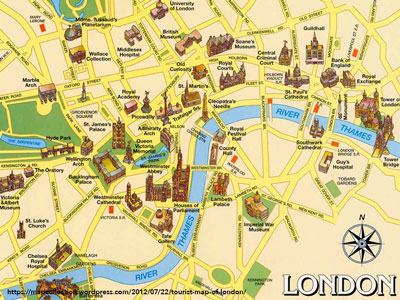
Several experiments have been done where a team of women are invited to design a map of an urban area starting with just a map of the streets but nothing else. They produced what is referred to as a "3D" map which uses small photos of key buildings and landmarks instead of symbols or labels. Different groups of men and women were GPS tagged and tasked to navigate a route using these maps. The women consistently outperformed the men when using these maps. The same task was set to other groups using the traditional mapping and this time the men outperformed women. However, when participants were questioned as to what they saw on the route the women recalled more landmarks along the route than the men.

Men's eyes usually have more cones with photoreceptor cells which helps with night vision but women are more attuned to a wider range of colours than men and recognise subtle levels of contrast and detail in low light. However, the ability to observe our surroundings requires good visibility, terrain and ambulatory confidence enabling one to look around whilst walking and not have to constantly look at one's feet, as well as spatial awareness developed through early years freedom to explore.

Sometimes this is evidenced in the planning approach on technical navigation legs. Men may tend to use dead reckoning cross country on a compass bearing which is more risky than taking a slightly longer route but following handrail features which provide more locational information during the journey. That approach tends to be less risky but requires more of an analytical approach. When misplaced, men may tend to stand still and try to work out time, distance and direction information to resolve the issue while women may opt to backtrack and look for the last known features and reassess things from there.
Now that other element - confidence. A key reason I hear many women give for attending a navigation course is to improve their navigation confidence and gain independence. Male participants often cite learning to use the tools of navigation - compass work, etc. Confidence is built through progressions of learning and practice. Our traditional navigation teaching methodology was designed by men based on OS mapping. It is difficult to be confident with a skill if we don't practice it, I often see couples out walking, the man carrying the map and compass. This could be an element of wanting to be in control and making decisions, or perhaps that the women are reticent because the mapping does not appear to be intuitive to them, but it is also a pragmatic case of there being only one map - this often limits an opportunity for both to practice map and ground observation skills and decision making.
So, there are many factors from our upbringing, to the mapping itself, to our powers of observation and how our brains are wired for decision making. These are all generalisations and the differences are relatively minor. Men may have a slight advantage when it comes to poor visibility navigation such as winter, but training and practice can overcome our natural tendencies.
The mounting evidence in western society suggests that there is little difference between the sexes in their ability to navigate effectively. However, they appear to go about it in slightly differently ways making best use of their evolutionary traits. Good navigators regardless of gender use a mix of all the complex skills. To label one gender as being better than the other is probably not a fair representation of reality.
If you are looking for some information on the basics of navigating with a map, then take a look at Outdoor Discovery, Active Exploration with a Map - suitable for all levels of navigation, and includes several easy to follow and fun activities.
Return to the Navigation Blog